Showing posts with label shaolin. Show all posts

The Zen Path of the Shaolin Monks


Shaolin kung fu is not just about defending yourself against an attacker or inflicting bodily harm. Shaolin martial arts also stress discipline, respect for yourself and others, patience, and being humble even in victory. The mental training of Shaolin martial arts helps prepare the student for any events that may come. Being physically prepared for an altercation is good, but if you are not mentally prepared you will not be focused enough to use the tools that your body has. This is why Shaolin meditation is such an important part of the Shaolin martial arts training. Meditation may not be literally practicing your physical tools, but it allows your mind to make better use of those tools.

Keeping cool in a self defense situation is one of the best ways to ensure you will survive. Tough mental preparedness allows the body to be pushed beyond its physical limits. Out bodies can only do so much, but our minds allow for much greater feats. I am sure you have heard of "mind over matter" and the truth is that it works. When the Shaolin added mental training to their physical training the result was that their martial arts system obviously surpassed all others in application and practical results.


One form of Shaolin meditation is called "Chan" or "Zen". The Shaolin received the concept of Zen meditation from an Indian priest named Bodhidharma. What Bodhidharma did that was so unique was to introduce breathing patterns into the meditation. You see Bodhidharma would find that the Shaolin monks were falling asleep during their meditation, so he added the breathing exercises to help keep them focus on increase their mental development. To this day Shoalin Kung Fu practitioners still use Chan meditation and it has formed the basis of the Shaolin mental preparation and development.

The Shaolin monks would prepare their minds to withstand the most terrible conditions so that when faces with those conditions in the real world, they would be prepared instead of shocked. Knowing that you have the mental toughness and readiness instills a confidence that allows you to go into any situation ready to act without hesitating. Self doubt is the number one way to be defeated before the enemy has even thrown a punch.
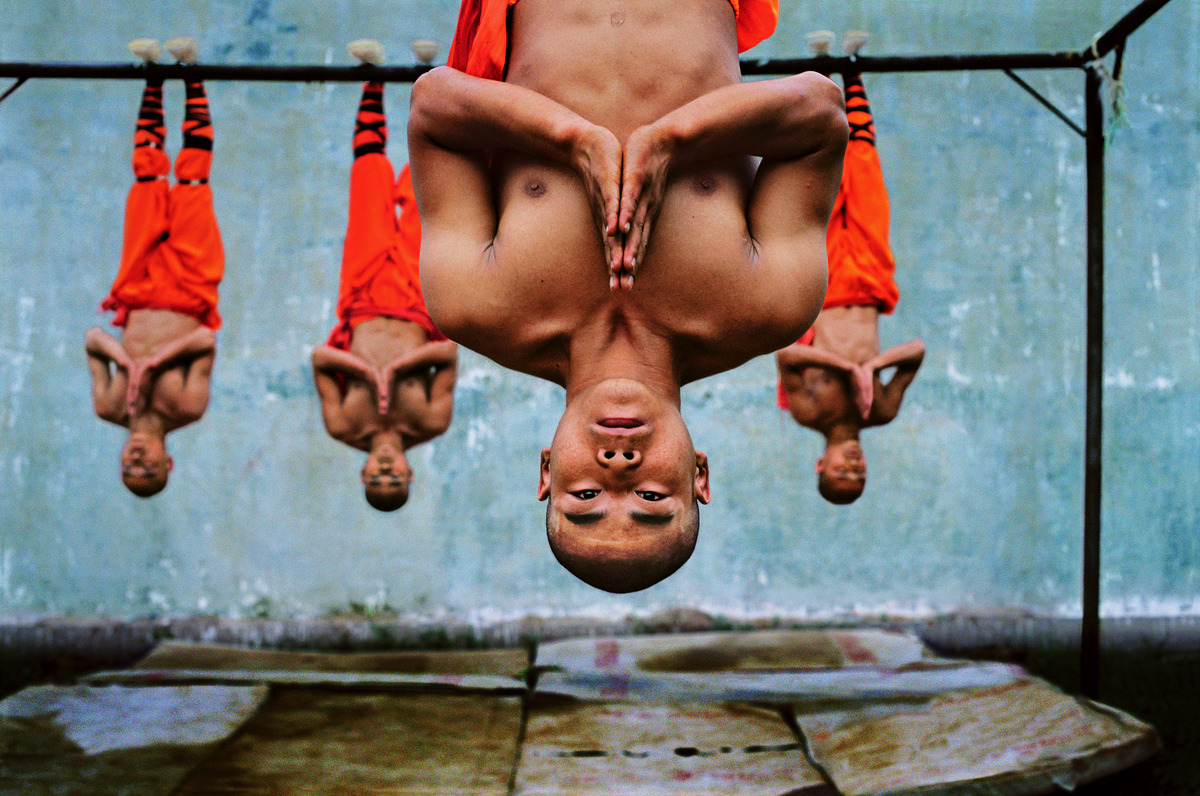


Meditation also allows one to focus his inner energy into his actions. The Japanese call this Chi, and many Westerners have heard of it. The Chinese, however, call it Kiai. Kiai allows a Kung Fu student to do things their physical body alone cannot do. Developing control over your Kiai is a matter of intense mental strength and conditioning. While some people may scoff at the idea of Kiai, and it is true that it might be more of a mind over matter application than an actual force, but Chinese Kung Fu masters has demonstrated their control over their Kiai by doing physical feats that would otherwise be impossible.

Easy Body Exercies to Increase Mind Power


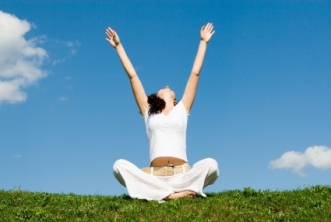
For thousands of years, physical disciplines like yoga, Tai Chi and Sufi Dancing have been said to increase mental and spiritual powers. If this is true, how might one explain this, and even better, how can we use this fact, practically, to enhance our lives as artists, business people, parents, and partners?

First, we have to strip away the mysticism from the activity. Not that these activities have no esoteric aspect, but rather that we have to approach them on the most down-to-earth level. The higher the tree, the deeper the roots. The taller the building, the deeper the foundations. If you want to soar, be certain that your tether is strong. So we need to start with a simple, physiological explanation (if possible!) and then suggest a way that this ties in to advanced artistic accomplishment, relationship skills, intellectual clarity, and spiritual growth.

Perhaps the single most important in terms of Body-Mind is known as the “Flow State Performance Spiral.” In order to relate this breakthrough thinking in such a short essay, we’ll have to condense considerably:

1) All physical technique is composed of three aspects: breathing, movement, and structure.

2) Each of these aspects is controlled by the other two (breath is created by movement and structure, etc.)

3) Stress “dis-integrates” this structure. In other words, when you are under stress, the physiological signs will manifest in your breathing rate or shallowness, your posture, your muscle tension. This is why lie detectors work!


Before he died, Hans Selye, the creator of the “stress” concept, said that he had misspoken himself, that it is not stress that hurts us, it is strain. Stress is the pressure we are under. But strain is the degree to which that stress warps us out of true.

Stress is not the enemy. In fact, when handled healthfully, it is the primary trigger for growth. So the key is to avoid strain.

Let’s skip around a bit to a truth about artistic and intellectual pursuits: your ability to utilize your intelligence, education, skills or talents will be in direct proportion to your ability to maintain “flow” under stress. Or to put it another way, in life, we are rewarded for how much stress we can handle without folding. Writer’s block, for instance, is nothing but a poor reaction to performance stress.

Combining these ideas, what we have is that mental and emotional balance under stress leads to excellence. Combine this with the fact that learning to cope with physical stress develops skills that are tremendously applicable to the mental arena. The most vulnerable portion of the “Flow State” triad (breath, movement, structure) is breathing. Proper breathing will be degraded by stress before you can detect it in posture or muscle tension. This is one of the reasons breath control is addressed in most religions and spiritual disciplines, whether this is through pranayama (yoga), exercise, hymns, ritual prayers, dance, or sacred postures.


A good yoga teacher, for instance, will place the student in a posture sufficiently extreme to force total concentration. When the student learns to relax and focus, that posture becomes relatively easy, and a more extreme posture is given. The point is to teach the student to monitor their own internal process. Fine martial arts or breathing meditation teachers use similar techniques.

The student learns to recognize the early signs of strain, and to dissipate them. NOTHING in life creates more stress than lack of oxygen, and learning to remain calm in the midst of oxygen debt will teach you to remain calm when the children are screaming, when your boss is on the rampage, when someone cuts you off on the freeway.

Or when you have a writing deadline, or when insecurity and fear hammers at the door of your resolve.

Deliberately practicing a physical discipline to enhance this quality of calmness and centeredness, while simultaneously working toward goals balanced in body, mind, and spirit, exposes you to the currents of life while helping you develop the skills and strategies necessary to excel. This, over time, leads to excellence, even in a purely mental arena.

There are numerous disciplines that will teach proper breathing under stress, and this article has listed a few. If you wish to reach your maximum potential as a mental, spiritual, and emotional being, seek one of these techniques out, and integrate it into your life. It is one of the best investments you could ever make in your future.

The Benefits of Tai Chi Meditation in Motion Energy Flow


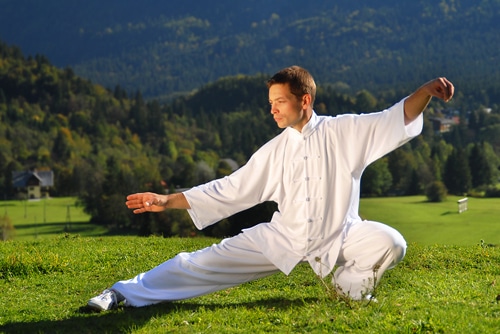
To the uninformed, the mere mention of the term “martial arts” evokes images of rigorous fighting and violence.  However, in China and other parts of the world, thousands are recognizing the health benefits of a Chinese form of martial arts called Tai Chi.   Many of its practitioners have adopted Tai Chi not only as a martial art but as a technique to manage stress and anxiety.  While its roots are to be found in China, the martial arts has gained wide following in the United States where stress and anxiety are now considered very common ailments.

According to the Midwest Center for Stress and Anxiety, at least 19 million Americans are now affected by stress and anxiety.  The anxiety disorder includes other symptoms of distress such as depression, alcoholism, excessive cigarette smoking, and other forms of subtance abuse.   In many cases, the disorder becomes so intense that a person with anxiety could no longer function properly or engage in normal everyday activities.  A generalized anxiety disorder (GAD) manifests itself as a chronic irritability, tension, or worry over a situation. The anxiety is often unwarranted or exaggerated when a person is anticipating a certain event or situation. Stress and anxiety are treatable and can be addressed using a variety of therapeutic options.  The great number of people afflicted with anxiety disorders has also resulted in the increase in demand for therapy centers and psychiatric services.  In these centers, a patient with an anxiety or stress disorder is provided counseling, coaching, and even diet advice.  If necessary, the patients are also given anxiety medication to help relieve their worries.


One very popular stress management alternative is Tai Chi, an ancient Chinese form of “soft” or internal martial arts that helps promote health and longevity.  Often seen being practiced by groups of people in parks, Tai Chi has grown popularity especially among the elderly and people with chronic illnesses.   Often called the “moving meditation,”  Tai Chi was developed in China as early as the 12th century by a Taoist monk named Zhang Sanfeng.   Tai Chi literally means “supreme ultimate boxing” or “boundless fist,”  a name that clearly points out to the combat applications of this slow, graceful Oriental art of physical fitness.

Many Tai Chi practitioners attest to the effectiveness of the art in promoting relaxation.  The deliberate, slow movements of the upper torso, hands, arms, legs, and feet are soft exercises that promote flexibility.  The practitioner breathes slowly with each graceful movement of Tai Chi.  The slow repetitive movements of this unique form of martial arts promote the internal blood and oxygen circulation.  It is believed that the emphasis of Tai Chi on proper breathing allows its practitioners to heal damaged internal organs and body cells. 

Whether it is done alone or as part of a group, the Tai Chi forms or exercises offer anxiety relief.  In fact, there are specific movements that require the practitioner to visualize the act of releasing stress and anxiety.  As the Tai Chi practitioner moves his arms inward, it is accompanied by slow, deep breathing. The next move of pushing the arms outward is accompanied by the exhalation of air and the visualization of pushing away all negative thoughts and worries.


Other practitioners have also found Tai Chi to be an effective means of breaking the habit of smoking and excessive use of alcohol.  Aside from bringing a sense of clarity and serenity, the practice of Tai Chi also helps the practitioner to adopt a more healthier lifestyle.  Advanced forms of Tai Chi include the study and use of traditional Chinese medicine which involves the use of acupuncture, herbal medications, and therapeutic massage.

For serious cases of stress and other psychological disorders, regular consultation with a doctor or psychiatrist is highly advised.   While Tai Chi is already a proven alternative form of stress management, some individuals may need to take anxiety medication that is prescribed a health professional.  

While it is not always necessary to take drugs to treat anxiety, balancing the collective wisdom from Eastern and Western forms of medicine may be an ideal way of approaching the issue of personal health and fitness.  Millions of people around the world have taken up Tai Chi not just as a martial art but as a means to release stress and tension.   With more efforts to promote the healing and fitness aspects of Tai Chi, it is expected that more people will learn and benefit from the ancient secrets to longevity and stress-free living.

Shaolin Kung Fu and Meditation Explained


Shaolin kung fu is not just about defending yourself against an attacker or inflicting bodily harm. Shaolin martial arts also stress discipline, respect for yourself and others, patience, and being humble even in victory. The mental training of Shaolin martial arts helps prepare the student for any events that may come. Being physically prepared for an altercation is good, but if you are not mentally prepared you will not be focused enough to use the tools that your body has. This is why Shaolin meditation is such an important part of the Shaolin martial arts training. Meditation may not be literally practicing your physical tools, but it allows your mind to make better use of those tools.

Keeping cool in a self defense situation is one of the best ways to ensure you will survive. Tough mental preparedness allows the body to be pushed beyond its physical limits. Out bodies can only do so much, but our minds allow for much greater feats. I am sure you have heard of "mind over matter" and the truth is that it works. When the Shaolin added mental training to their physical training the result was that their martial arts system obviously surpassed all others in application and practical results.


One form of Shaolin meditation is called "Chan" or "Zen". The Shaolin received the concept of Zen meditation from an Indian priest named Bodhidharma. What Bodhidharma did that was so unique was to introduce breathing patterns into the meditation. You see Bodhidharma would find that the Shaolin monks were falling asleep during their meditation, so he added the breathing exercises to help keep them focus on increase their mental development. To this day Shoalin Kung Fu practitioners still use Chan meditation and it has formed the basis of the Shaolin mental preparation and development.

The Shaolin monks would prepare their minds to withstand the most terrible conditions so that when faces with those conditions in the real world, they would be prepared instead of shocked. Knowing that you have the mental toughness and readiness instills a confidence that allows you to go into any situation ready to act without hesitating. Self doubt is the number one way to be defeated before the enemy has even thrown a punch.

Meditation also allows one to focus his inner energy into his actions. The Japanese call this Chi, and many Westerners have heard of it. The Chinese, however, call it Kiai. Kiai allows a Kung Fu student to do things their physical body alone cannot do. Developing control over your Kiai is a matter of intense mental strength and conditioning. While some people may scoff at the idea of Kiai, and it is true that it might be more of a mind over matter application than an actual force, but Chinese Kung Fu masters has demonstrated their control over their Kiai by doing physical feats that would otherwise be impossible.