Showing posts with label fitness. Show all posts

The Zen Path of the Shaolin Monks


Shaolin kung fu is not just about defending yourself against an attacker or inflicting bodily harm. Shaolin martial arts also stress discipline, respect for yourself and others, patience, and being humble even in victory. The mental training of Shaolin martial arts helps prepare the student for any events that may come. Being physically prepared for an altercation is good, but if you are not mentally prepared you will not be focused enough to use the tools that your body has. This is why Shaolin meditation is such an important part of the Shaolin martial arts training. Meditation may not be literally practicing your physical tools, but it allows your mind to make better use of those tools.

Keeping cool in a self defense situation is one of the best ways to ensure you will survive. Tough mental preparedness allows the body to be pushed beyond its physical limits. Out bodies can only do so much, but our minds allow for much greater feats. I am sure you have heard of "mind over matter" and the truth is that it works. When the Shaolin added mental training to their physical training the result was that their martial arts system obviously surpassed all others in application and practical results.


One form of Shaolin meditation is called "Chan" or "Zen". The Shaolin received the concept of Zen meditation from an Indian priest named Bodhidharma. What Bodhidharma did that was so unique was to introduce breathing patterns into the meditation. You see Bodhidharma would find that the Shaolin monks were falling asleep during their meditation, so he added the breathing exercises to help keep them focus on increase their mental development. To this day Shoalin Kung Fu practitioners still use Chan meditation and it has formed the basis of the Shaolin mental preparation and development.

The Shaolin monks would prepare their minds to withstand the most terrible conditions so that when faces with those conditions in the real world, they would be prepared instead of shocked. Knowing that you have the mental toughness and readiness instills a confidence that allows you to go into any situation ready to act without hesitating. Self doubt is the number one way to be defeated before the enemy has even thrown a punch.
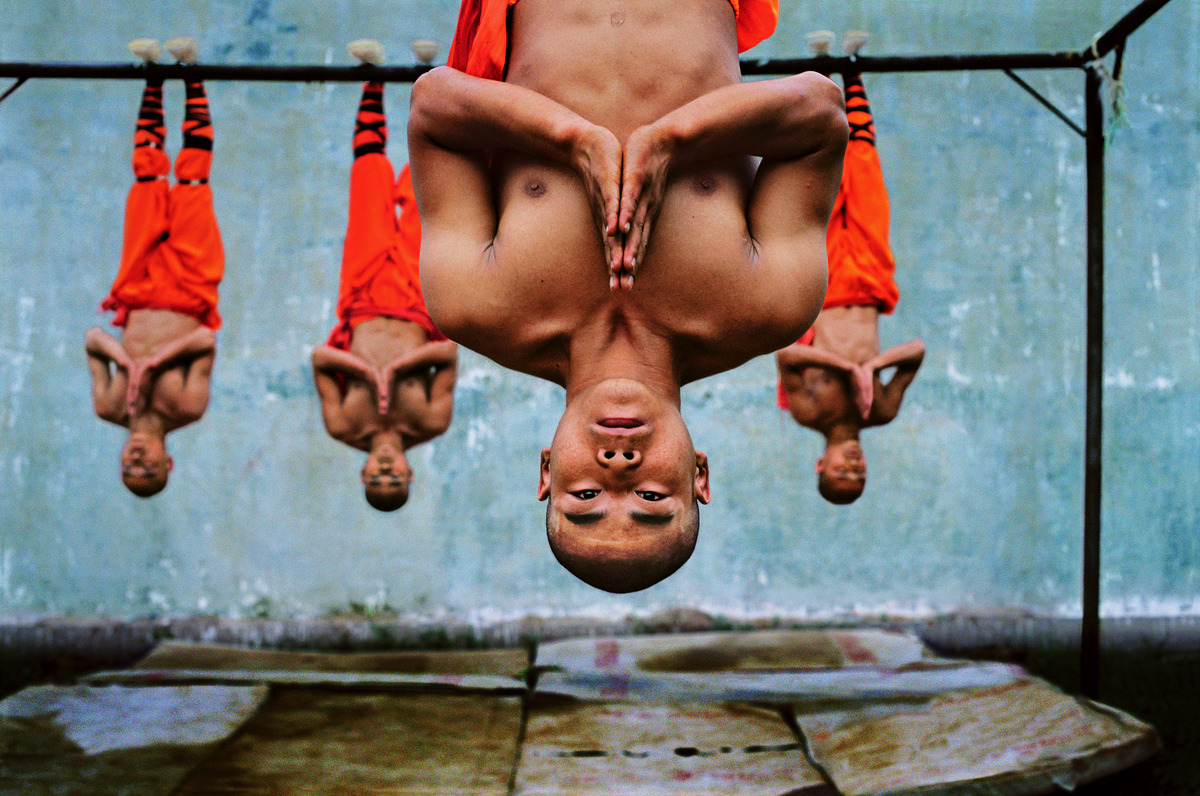


Meditation also allows one to focus his inner energy into his actions. The Japanese call this Chi, and many Westerners have heard of it. The Chinese, however, call it Kiai. Kiai allows a Kung Fu student to do things their physical body alone cannot do. Developing control over your Kiai is a matter of intense mental strength and conditioning. While some people may scoff at the idea of Kiai, and it is true that it might be more of a mind over matter application than an actual force, but Chinese Kung Fu masters has demonstrated their control over their Kiai by doing physical feats that would otherwise be impossible.


How to Learn Falun Gong Exercise For Beginners Tutorial Routine Martial Arts


Falun Gong or Falun Dafa (literally means "Dharma Wheel Practice" or "Law Wheel Practice") is a Chinese spiritual practice that combines meditation and qigong exercises with a moral philosophy centered on the tenets of Truthfulness, Compassion, and Forbearance (Chinese: 真、善、忍). The practice emphasizes morality and the cultivation of virtue, and identifies as a qigong practice of the Buddhist school, though its teachings also incorporate elements drawn from Taoist traditions. Through moral rectitude and the practice of meditation, practitioners of Falun Gong aspire to better health and, ultimately, spiritual enlightenment.


Falun Gong was first taught publicly in Northeast China in 1992 by Li Hongzhi. It emerged toward the end of China's "qigong boom"—a period which saw the proliferation of similar practices of meditation, slow-moving exercises and regulated breathing. It differs from other qigong schools in its absence of fees or formal membership, lack of daily rituals of worship, its greater emphasis on morality, and the theological nature of its teachings. Western academics have described Falun Gong as a qigong discipline, a "spiritual movement", a "cultivation system" in the tradition of Chinese antiquity, or as a form of Chinese religion.

Easy Body Exercies to Increase Mind Power


For thousands of years, physical disciplines like yoga, Tai Chi and Sufi Dancing have been said to increase mental and spiritual powers. If this is true, how might one explain this, and even better, how can we use this fact, practically, to enhance our lives as artists, business people, parents, and partners?

First, we have to strip away the mysticism from the activity. Not that these activities have no esoteric aspect, but rather that we have to approach them on the most down-to-earth level. The higher the tree, the deeper the roots. The taller the building, the deeper the foundations. If you want to soar, be certain that your tether is strong. So we need to start with a simple, physiological explanation (if possible!) and then suggest a way that this ties in to advanced artistic accomplishment, relationship skills, intellectual clarity, and spiritual growth.

Perhaps the single most important in terms of Body-Mind is known as the “Flow State Performance Spiral.” In order to relate this breakthrough thinking in such a short essay, we’ll have to condense considerably:

1) All physical technique is composed of three aspects: breathing, movement, and structure.

2) Each of these aspects is controlled by the other two (breath is created by movement and structure, etc.)

3) Stress “dis-integrates” this structure. In other words, when you are under stress, the physiological signs will manifest in your breathing rate or shallowness, your posture, your muscle tension. This is why lie detectors work!


Before he died, Hans Selye, the creator of the “stress” concept, said that he had misspoken himself, that it is not stress that hurts us, it is strain. Stress is the pressure we are under. But strain is the degree to which that stress warps us out of true.

Stress is not the enemy. In fact, when handled healthfully, it is the primary trigger for growth. So the key is to avoid strain.

Let’s skip around a bit to a truth about artistic and intellectual pursuits: your ability to utilize your intelligence, education, skills or talents will be in direct proportion to your ability to maintain “flow” under stress. Or to put it another way, in life, we are rewarded for how much stress we can handle without folding. Writer’s block, for instance, is nothing but a poor reaction to performance stress.

Combining these ideas, what we have is that mental and emotional balance under stress leads to excellence. Combine this with the fact that learning to cope with physical stress develops skills that are tremendously applicable to the mental arena. The most vulnerable portion of the “Flow State” triad (breath, movement, structure) is breathing. Proper breathing will be degraded by stress before you can detect it in posture or muscle tension. This is one of the reasons breath control is addressed in most religions and spiritual disciplines, whether this is through pranayama (yoga), exercise, hymns, ritual prayers, dance, or sacred postures.


A good yoga teacher, for instance, will place the student in a posture sufficiently extreme to force total concentration. When the student learns to relax and focus, that posture becomes relatively easy, and a more extreme posture is given. The point is to teach the student to monitor their own internal process. Fine martial arts or breathing meditation teachers use similar techniques.

The student learns to recognize the early signs of strain, and to dissipate them. NOTHING in life creates more stress than lack of oxygen, and learning to remain calm in the midst of oxygen debt will teach you to remain calm when the children are screaming, when your boss is on the rampage, when someone cuts you off on the freeway.

Or when you have a writing deadline, or when insecurity and fear hammers at the door of your resolve.

Deliberately practicing a physical discipline to enhance this quality of calmness and centeredness, while simultaneously working toward goals balanced in body, mind, and spirit, exposes you to the currents of life while helping you develop the skills and strategies necessary to excel. This, over time, leads to excellence, even in a purely mental arena.

There are numerous disciplines that will teach proper breathing under stress, and this article has listed a few. If you wish to reach your maximum potential as a mental, spiritual, and emotional being, seek one of these techniques out, and integrate it into your life. It is one of the best investments you could ever make in your future.

Using Yoga for a Healthier Life


Health is the real wealth of an individual. Good health does not mean the absence of physical illness but also the lack of mental and social illness. A healthy person can properly survive and easily cope with the difficulties and stress of daily living. Incorporating regular physical activities, nutritious diet, and refraining from alcohol and cigarettes are necessary in maintaining a fit and healthy body. Yoga is a physical activity that has been used in the ancient times to alleviate health problems associated with high blood pressure, high cholesterol, asthma, shallow breathing, backaches, chronic illness, and many other forms of discomfort. Nowadays, Yoga has gone from a spiritual discipline practiced by many in the Far East, into a mainstream exercise routine that has been taught in many gyms around the world. Other researches suggest that yoga may promote relaxation and reduce distress.

A new form of yoga that focuses on a more fitness-based approached has been developed. It is called Power Yoga, a method closely modeled after the Ashtanga style of practice. The term Power Yoga became widely used in the mid-'90s when many yoga teachers tried new ways to make Ashtanga Yoga more accessible to the western audience. Both Power and Ashtanga Yoga focuses on strength and flexibility. The only difference between the traditional method and Power Yoga is that the latter does not require the performance of a series of poses. It took the basics of yoga and and gave it a dose of aerobics to tone the muscles, sharpen focus, and strengthen the heart.

Other known benefits of practicing Power Yoga include:

Improved strength, endurance, and stamina
Tighter abs, legs, and arms
Helps release physical tension
Helps maintain good and proper posture
Serves as a good warm up for athletes
Improves an athlete's overall performance

Power Yoga is a very accessible exercise.  To practice this new yoga method, all that is needed is a flat floor surface, a mat or towel, and enough overhead space to extend the arms. It can be performed  by individuals of different ages and level of physical condition.  However, not all poses should be attempted by everyone. Proper posture and alignment should always be maintained during stretch or posture to avoid injuries. These activities should be stopped when there is fatigue, pain, or dizziness. In addition, the mental component of yoga is as important as its physical activities. Concentration and meditation should not be taken for granted. Yoga should be done with an open and gentle mind when one performs yoga positions and posture. Impatience, self-criticism, and comparing oneself with others may hamper the improvement of one's physical and mental health.

Individuals who want to engage in physical activities like yoga should consult doctors and other health professionals before taking yoga classes. Certain injuries to the wrist, back, and ankles may prevent some individuals from practicing yoga postures and positions. Furthermore, yoga should be practiced with care and precaution. Some people have reported injuries that were acquired by executing yoga postures without focus, or by attempting difficult positions without working them gradually or by not having proper supervision. Oftentimes, beginners complain of muscle soreness and fatigue after engaging in yoga. These effects may disappear with continuous practice. Yoga is a great way to strengthen the and body and improve overall health.

Advanced Yoga Demonstration with Urban Yogi Bri


As it is generally admitted by yoga practitioners and yoga trainers, yoga sessions are very much about self equilibrium, peacefulness and meditation. By practicing meditation we can all reach the sublime state of learning the purpose of our existence and maximizing our will to reach it. 

Studies have proven that meditation highly contributes to both physical and psychological well-being, which is why yoga routines consider the practice of meditation as one of its main principles. 

Reducing physical pain, stress and blood pressure, meditation promotes a state of mind, by which we can achieve self-healing. Due to all these uncontestable benefits that this practice involves, there is a great variety of information available in different formats, regarding the most efficient meditation techniques, postures, courses, products and forums. 

Religion and psychology promote meditation as well, as a way of assessing our actions and seeking self improvements. As many theories and ancient believes demonstrate, our present life is determined by our previous actions, which is why it is vital to analyze and meditate on the things we do, in order to find ways of improving ourselves and thus, creating a brighter future.

Meditation is definitely one of the main principles of yoga, as it has been verified that it is a trustworthy tool to use for achieving mental clarity and health. A very important thing to know is the fact that there are various types of meditation exercises, designed for advanced or beginner yoga students. Thus, you have to carefully analyze all details and information provided on each and every one of these techniques and exercises, so that you obtain the maximum results, from your meditation routines. 

Despite the fact that many people believe that, just like breathing, meditation is something that comes naturally and cannot be taught, there are a few aspects of this process, which can increase your efficiency and your results, in no time. One of the aspects you have to bear in mind is the time of the day when you carry out your yoga meditation; hence, it would be perfect if you could do it either in the morning or late in the evening, as during those particular moments of the day, the atmosphere is charged with a high level of spiritual energy.

Here is some advice regarding meditation:


  • Before starting the meditation session free your mind of all worries. 
  • Try to locate a quiet place, where you are not likely to be disturbed. 
  • It is recommended to choose the same moment of the day, as well as the same place, for your meditation routine. 
  • Focus on meditation; do not let your mind get lost in other thoughts.
  • Try to follow a pattern when breathing. 
  • Your head, back and neck have to be placed in a perfect straight line.


Remember that it is crucial both to perform the meditation session and to observe the results, in order to get close to experiencing the supreme synchronization between the body and the spirit.

How to Learn Kung Fu Lesson Two: Strength Exercises Tutorial Qi Gong Tra...


In this video our friends over at Energy-cultivation.com show us how we can use simple Kung Fu exercises to increase our strength and reprogram our minds to become more successful and achieve more in our lives using basic martial arts exercises.

How to Learn Psychic Kung Fu Qi Gong Lesson One Tutorial for Beginners


Chi is the vital life force that flows through all animate objects. It is a manifestation of your will and interal energies. Similar concepts can be found in almost all cultures of the world. In Japan it is called 'Ki', the Guru's of India call it 'Prana', the Hebrew word for it is 'Rauch' and the ancient Greeks knew it as 'Pneuma'. The ability to focus ones Chi, or Psi, is an important part of developing Psychic powers.

THE HEALING POWER OF MEDITATION


The use of meditation for healing and spiritual enlightenment has been an ancient practice that is common among the world's great religions and cultures. It is an accepted and proven alternative therapy that is classified under “mind-body medicine.”

Through the years, more and more people have found meditation as an effective way to ease chronic pain, improve heart health, relieve stress and anxiety, boost mood and immunity, and resolve pregnancy problems. Even doctors are already prescribing meditation as a way to lower blood pressure; improve exercise performance in people with angina; help people with asthma breathe easier; and to relieve insomnia.  It is a safe and simple way to balance a person's physical, emotional, and mental well-being.

According to cardiologist Herbert Benson, MD: “Any condition that's caused or worsened by stress can be alleviated through meditation.”  Benson is the founder of the Mind/Body Institute at Harvard Medical School's Beth Israel Deaconess Medical Center.   He said that the relaxation induced by meditation can help decrease metabolism, lower blood pressure, and improve heart rate, breathing, and brain waves.  When the body receives a quiet message to relax, tension and tightness begin to seep from muscles.

Brain scans (or Magnetic Resonance Imaging, or MRI) of people who meditate have been used to show scientific evidence that meditation really works. It shows an increase in activity in areas that control metabolism and heart rate. Other studies on Buddhist monks have shown that meditation produces long-lasting changes in the brain activity in areas involving attention, working memory, learning, and conscious perception.

Meditation is not difficult to learn but it is a skill that needs to be practiced in order to develop the ability to focus on the breathing patterns and the need to ignore distracting thoughts.  Meditation is usually accompanied by a mantra, a word or phrase that is repeatedly chanted to produce a biological response such as relaxation.  The soothing power of repetition is at the heart of meditation.  Constant practice of meditation allows people to learn anddevelop the ability to produce meditative and relaxed states without difficulty. Meditating several times during the day makes the practitioner feel relaxed throughout the entire day.

Benefits of Meditation 
Heart Health: Countless studies have shown that regular practice has significantly helped reduce high blood pressure. A study conducted at the College of Maharishi Vedic Medicine in Fairfield, Iowa, showed significant lowering of blood pressure and heart rate in black adults.  Another study conducted by the American Journal of Hypertension showed that teenagers who meditated for 15 minutes twice a day for four months were able to lower their blood pressure a few points.
Immune Booster:  In a Psychosomatic Medicine study testing immune function, meditation has bben shown to be useful in warding off illness and infections.  Flu shots were given to volunteers who had meditated for eight weeks and to people who didn't meditate. The result of blood tests from the meditation group had produced higher levels of antibodies against the flu virus.

Women's Health: Premenstrual syndrome (PMS), infertility problems, and even breastfeeding can be improved when women meditate regularly. In one study, PMS symptoms subsided by 58% when women meditated. Another study found that hot flashes were less intense among women who practiced meditation.  Women struggling with infertility had much less anxiety, depression and fatigue following a 10-week meditation program; 34 percent became pregnant within six months. Also, new mothers who meditated on images of milk flowing from their breasts were able to more than double their production of milk.

Meditation Enhances Brain Activity
Those who practice meditation regularly showed evidence of significantly higher brain activity, called gamma wave activity, in areas associated with learning and happiness compared with those who didn't practice meditation. Gamma waves involve mental processes including attention, memory, learning and conscious perception.

Many health care providers consider meditation as a key element of an integrated health program.  However, when you are having a hard time getting into that meditative state, try to enroll in a class.  It will help and guide you with your progress.  Any practice that can evoke the relaxation response can be beneficial, be it through meditation, yoga, breathing, or repetitive prayer.  The growing body of research literature on meditation and other alternative therapies gives us no reason to believe that one is better than the other.


What is Qi Gong - How to use Qi Gong Exercises to improve your life

What is Qi Gong and how can you use it in your daily life to improve your health, fitness and well being? Can anyone do Qi Gong? Is Qi Gong the same thing as Chi Gung? In this short video we take a look at what Qi Gong is all about, the benefits and the different ways you can practice at home. Qi Gong is all about Chi and energy flow.